CardinaleWay Mazda Peoria - Is the 2026 Mazda Mazda3 Sedan more fun to drive than the 2026 Toyota Corolla around Phoenix, AZ?
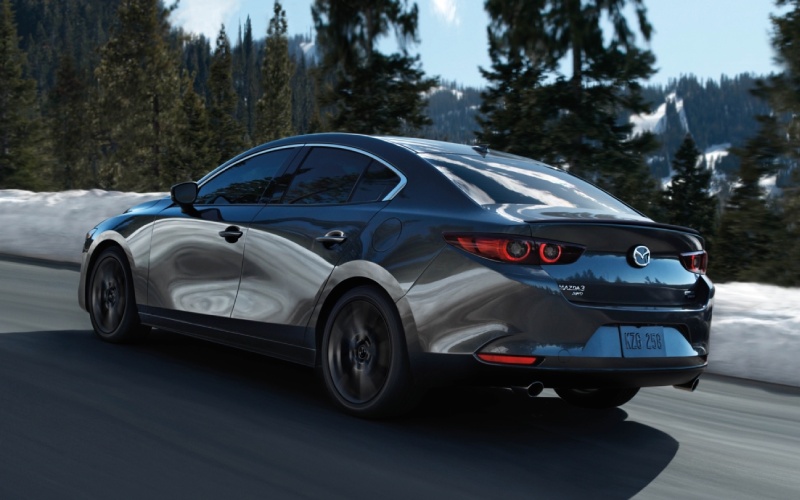
Compact sedans have become feature-rich and impressively refined, but the question a lot of shoppers ask is simple: which one is more fun to drive in daily life? After hundreds of test drives and owner conversations, the consensus is clear—Mazda’s tuning philosophy delivers a more connected, rewarding feel behind the wheel. The 2026 Mazda Mazda3 Sedan pairs a responsive SKYACTIV®-G 2.5-liter engine with a SKYACTIV®-DRIVE 6-speed automatic that shifts when your right foot expects it. The optional turbocharged engine compounds the effect with satisfying thrust when you need it to dart into an opening on the 51 or surge up a ramp. By contrast, the 2026 Toyota Corolla emphasizes serenity and efficiency with its CVT and hybrid variants—two qualities many commuters appreciate—yet it doesn’t match the Mazda3’s precision in how the car rotates into a corner or pulls out with steady, linear power.
Even at city speeds, the Mazda3’s SKYACTIV-VEHICLE DYNAMICS with G-Vectoring Control Plus quietly manages weight transfer as you turn and straighten the wheel, which makes the car feel settled instead of floaty. Steering inputs feel crisp without being twitchy, so threading through midtown traffic or easing into a tight parking structure becomes second nature. The Corolla remains composed and predictable—and that’s praise in its own right—but its controls and power delivery are tuned to keep effort low rather than to amplify driver confidence and enjoyment. If you value a car that “talks” to you through the controls in a subtle, confidence-boosting way, the Mazda3 is the one that stands out.
Does available all-wheel drive change the character of these sedans?
Absolutely, and this is an area where both models deserve credit but with an important distinction. The Mazda3’s i-ACTIV AWD® is a predictive system—it’s always sampling inputs like steering angle and outside temperature to anticipate rather than react to slip. That proactive approach gives the car a planted feel as you round freeway cloverleafs, pull away from dusty intersections after a light sprinkle, or carve a smooth line across gently curving arterials. The Corolla Hybrid’s available Electronic On-Demand AWD adds traction by powering the rear axle when needed, especially helpful if you split time between in-town commutes and weekend day trips on mixed surfaces. For drivers who want AWD to be invisible and confidence-building in dry conditions as much as in the wet, the Mazda3’s system feels like it was calibrated by enthusiasts for enthusiasts.
What about visibility and confidence in tight spaces?
Good question, because “fun to drive” isn’t just about backroad curves—confidence in tight scenarios matters, too. The Mazda3 offers an available 360° View Monitor that clearly displays curbs and neighboring vehicles when maneuvering in parking garages, school pickup lines, or busy shopping centers. Add in an available Head-Up Display that projects speed and navigation prompts into your line of sight, and you get a car that helps you stay focused on traffic instead of glancing down and back up repeatedly. Toyota equips the Corolla with a standard backup camera and strong driver-assistance through Toyota Safety Sense™ 3.0, but it doesn’t offer a surround-view camera or a head-up display in this class. Those specific features—not gadgets, but genuinely useful aids—contribute to the Mazda3’s low-stress, high-confidence personality, which is part of what makes it enjoyable to drive every day.
How does cabin ambiance affect day-to-day enjoyment?
Step into both sedans and you’ll notice clean designs and smart tech. Where the Mazda3 moves ahead is in material quality, switch feel, and how well the cabin isolates road noise on coarse surfaces. The layout is driver-centric without being fussy, and the available Bose® audio system is tuned to the cabin’s geometry so spoken-word content stays crisp and bass never overwhelms the mids. Wireless Apple CarPlay® and Android Auto™ are standard on both cars, which is a win for clutter-free consoles, but Mazda’s interface and dial controls complement the touchscreen in a way that reduces distraction over long commutes. The Corolla’s available 12.3-inch digital gauge cluster is a standout feature for at-a-glance info; it’s modern and legible. Still, the Mazda3’s tactile polish—how the shifter moves, how the steering wheel leather feels on a hot afternoon, how quietly the cabin settles at 70 mph—raises the everyday experience from “good” to “genuinely pleasing.”
Who should choose which?
If the top priority is low-effort driving with a feature set that covers the bases, the Corolla makes a lot of sense. Add the Hybrid for strong efficiency and available AWD, and you’ve got a formula built for predictable, serene commuting. If you enjoy the act of driving and want a car that responds precisely and feels refined—without going to a larger or pricier segment—the Mazda3 makes a compelling case. The available turbo, i-ACTIV AWD®, 360° View Monitor, rain-sensing wipers, and upscale cabin touches come together to reward every mile. For shoppers comparing test drives back-to-back, the Mazda3 tends to be the one that prompts a smile and an immediate, “Yes, this is it.”
- Powertrain character: Mazda3’s conventional automatic and available turbo feel immediate and engaging; Corolla’s CVT and Hybrid emphasize smoothness over excitement.
- Chassis tuning: G-Vectoring Control Plus helps the Mazda3 rotate and settle intuitively; Corolla prioritizes comfort and predictability.
- Confidence tech: Mazda’s available 360° View Monitor and Head-Up Display are tangible helpers in daily traffic and parking.
One final note on convenience: both sedans deliver the advanced driver-assistance most buyers now expect, including adaptive cruise with stop-and-go and lane-keeping assistance. The difference shows up in how the systems are integrated and how naturally the vehicles behave with them engaged. The Mazda3’s tuning tends to feel more organic, especially in subtle throttle and brake transitions, which again feeds into that sensation of control and calm.
Frequently Asked Questions:
Is the Mazda3’s ride too firm for daily commuting?
No. The Mazda3 balances control with compliance. It feels buttoned-down when you need it to be and relaxed when cruising. The chassis tuning filters out harshness without feeling soft or vague.
Does the Corolla offer anything the Mazda3 doesn’t?
The Corolla Hybrid’s available Electronic On-Demand AWD and its focus on serene, efficient commuting are strong advantages for drivers who want minimal effort and the long-haul calm of a CVT. Both are solid picks; the Mazda3 is simply the more engaging one.
Will I notice AWD even in dry weather?
Yes. Mazda’s i-ACTIV AWD® is predictive, so the car often feels more planted as you accelerate from tight corners or around long highway sweepers, even when it’s dry.
Curious to feel the difference firsthand? CardinaleWay Mazda Peoria welcomes test drives that focus on what matters to you—steering feel, highway stability, parallel parking ease, or advanced safety in traffic. Our store is proudly serving Phoenix, Tucson, and Deer Valley, and we’ll tailor your route so you can evaluate the exact qualities you care about most.