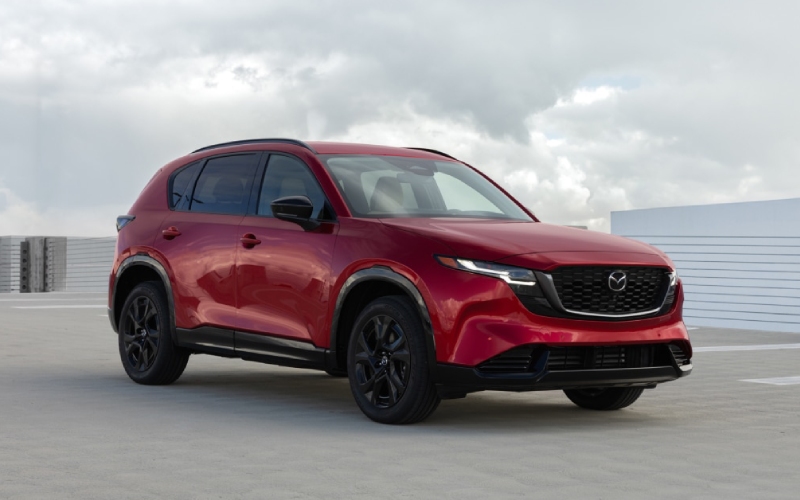
CardinaleWay Mazda Peoria - Is the 2026 Mazda CX-5 quieter than the 2026 Toyota RAV4 around Phoenix, AZ?
Shoppers often ask a deceptively simple question when cross-shopping compact SUVs: which one is quieter on the road? Cabin hush influences more than comfort—it shapes how easy it is to focus on navigation cues, carry on a conversation, or decompress on the way home. Below, we unpack how the 2026 Mazda CX-5 and the 2026 Toyota RAV4 approach cabin noise, vibration, and overall ride refinement, so you can decide which one better fits your driving routine around the Valley.
How both brands approach quietness and ride feel
Mazda builds vehicles around a human-centric principle, tuning structure, suspension geometry, and steering response to work in harmony. In the 2026 CX-5, that means a composed ride that filters out the jostle of patched pavement without feeling disconnected. Its recalibrated 2.5-liter engine and 6-speed automatic deliver an easygoing rhythm through neighborhoods and a calm cadence on freeways, minimizing the droning or surging sensations some drivers notice with other setups. Toyota’s 2026 RAV4, built on the TNGA platform, aims for a broad balance of capability and comfort. Its lineup spans hybrid and plug-in hybrid options, with AWD configurations that suit light trail use and family outings. Both approaches are competent; the difference lies in how the details add up minute by minute.
The CX-5’s larger cabin and wider door openings also contribute indirectly to comfort. Passengers can settle in quickly, and fewer awkward movements reduce the thumps and rattles that sometimes come from hurried loading or tight seating angles. Meanwhile, the RAV4’s straightforward controls and available panoramic roof foster an airy feel that families appreciate. The key is to look beyond any single specification and consider how the vehicles behave in everyday scenarios—stop-and-go, long commutes, and quick errands.
Noise sources to evaluate on your test drive
Quietness is a blend of structure, tuning, and technology. Use this checklist during back-to-back drives:
- Engine and transmission harmony: Listen for smooth, consistent acceleration without droning; in the CX-5, the geared automatic favors a natural, low-stress feel.
- Road and wind isolation: Pay attention to roofline and mirror noise at 65 mph; the CX-5’s evolved proportions and sealing help reduce hiss and hum.
- Suspension composure: Note how the vehicle reacts to speed bumps and patched asphalt; a controlled rebound often signals better long-drive comfort.
- Tire noise tuning: Evaluate how tire roar builds on coarse surfaces; this is where chassis and insulation work together to soften the soundscape.
- Tech and infotainment refinement: Spot how easy it is to use navigation and voice control without cranking volume; the CX-5’s Google built-in can lower the need for repeated prompts.
Technology’s role in perceived quiet
Interface design affects noise, too. The CX-5’s available 15.6-inch touchscreen with Google built-in allows native Google Maps navigation and natural, conversational voice control, so you can keep commands short and precise. That tends to reduce the “try again” loop that raises in-cabin volume. Toyota’s RAV4 offers a standard 12.3-inch digital gauge cluster and an available 12.9-inch multimedia touchscreen, along with Toyota Safety Sense 4.0 and convenience tech like available Traffic Jam Assist. It’s a capable package, and for many, the core features meet expectations. The difference is that the CX-5’s native Google ecosystem keeps key information unified and predictable—less menu-diving, fewer mismatched prompts—so settling into a calm, consistent routine is easier.
Another factor is seating ergonomics. The CX-5’s thoughtful packaging, including increased rear knee and headroom and a lower cargo lift-in height, shortens the time it takes to get comfortable and to load gear smoothly. It’s not just about luxury—it’s how the vehicle helps the day go more quietly, with fewer bumps, scrapes, and door fiddling. The RAV4 counters with a wide range of trims and comfort features, including available heated and ventilated front seats and an available panoramic glass roof, ensuring the cabin can be tailored to family needs. Each brand’s approach has merit, yet the CX-5’s execution feels particularly cohesive for daily routines.
Frequently Asked Questions:
Is one model consistently quieter at highway speeds?
Actual cabin loudness depends on pavement quality, wind conditions, and tire choice, but many drivers perceive the CX-5’s geared automatic and sound tuning as more serene during steady cruising. Its smooth, low-effort shifts and calm engine note help keep conversations natural without raising voices.
Does standard AWD change noise levels?
With the CX-5, i-ACTIV AWD® is standard and tuned for seamless engagement, so traction improvements do not bring added clatter. RAV4’s AWD systems are also impressively refined, especially in higher trims, though AWD is not standard across the lineup.
How does technology influence day-to-day quiet?
Intuitive tech minimizes repeated inputs. The CX-5’s available Google built-in and native Google Maps help reduce on-the-fly fiddling. RAV4’s Toyota Audio Multimedia is clear and capable; the CX-5 simply leans further into familiar, integrated tools many drivers already use elsewhere.
What should I listen for on a test drive?
Beyond engine and wind noise, listen to how doors close, how the suspension recovers after sharp bumps, and whether voice commands work on the first try. These cues reveal real-world quiet more reliably than any single spec line.
For shoppers who crave a calm, connected commute, the 2026 CX-5’s blend of standard i-ACTIV AWD®, cohesive chassis tuning, and available Google built-in gives it a meaningful advantage in perceived quiet and ease. The 2026 RAV4 remains a smart, versatile SUV—with hybrid and plug-in hybrid options and Toyota Safety Sense 4.0—but its approach feels more modular. That’s not a drawback; it’s a different philosophy. Many drivers still prefer the CX-5’s single, well-honed formula that gets all the little things right in one shot.
Ready to compare them firsthand? Plan a back-to-back drive on familiar roads, ideally at the same time of day and at steady freeway speeds. Keep notes about voice level during conversations, how often you need to repeat commands, and how each SUV handles freeway expansion joints. Small impressions add up quickly—and usually point clearly to your best fit.
For personalized guidance and an easy test-drive process, our team can help you set up routes that reflect your daily routine. You will leave confident you chose the SUV that truly sounds and feels right for your drive. CardinaleWay Mazda Peoria is serving Phoenix, Tucson, and Deer Valley with informed, low-pressure help so you can focus on what matters: how each vehicle really feels to live with every day.